Safety File Rejected? 10 Common Mistakes Contractors Must Avoid
Is your contractor Safety File ready for submission?
Having your Safety File rejected or returned for corrections can delay your project, create unnecessary administrative work and prevent your team from starting work as planned.
For contractors working in construction, mining, industrial environments and other high-risk workplaces, preparing the correct health and safety documentation is an important part of project preparation.
Yet many contractors make avoidable mistakes when compiling their Safety Files.
At BlueRisk LKD, we understand the importance of preparing organised, complete documentation that addresses the applicable legal requirements and the specific requirements of the client or principal contractor.
In this article, we highlight 10 common mistakes contractors should check before submitting their Safety Files.
1. Failing to Check the Client’s Requirements
One of the most common mistakes is preparing a Safety File without first obtaining the client’s specific requirements.
Different clients, construction projects and industrial sites may have different documentation requirements. A Safety File prepared for one project may not satisfy the requirements of another.
How to avoid this mistake:
• Obtain the client’s current Safety File requirements or checklist.
• Confirm which documents must be submitted for approval.
• Check whether the client requires specific templates or formats.
• Confirm any site-specific requirements before compiling the file.
Remember: A generic Safety File is not automatically suitable for every project.
2. Missing or Incomplete Health and Safety Policies
Contractors sometimes submit files containing incomplete policies, unsigned documents or information that does not reflect their current business activities.
Policies and supporting documents should be appropriate to the organisation and the work being undertaken.
How to avoid this mistake:
• Check that required policies are included.
• Ensure documents are properly completed and approved where necessary.
• Verify that company details are correct.
• Review documents regularly and update them when circumstances change.
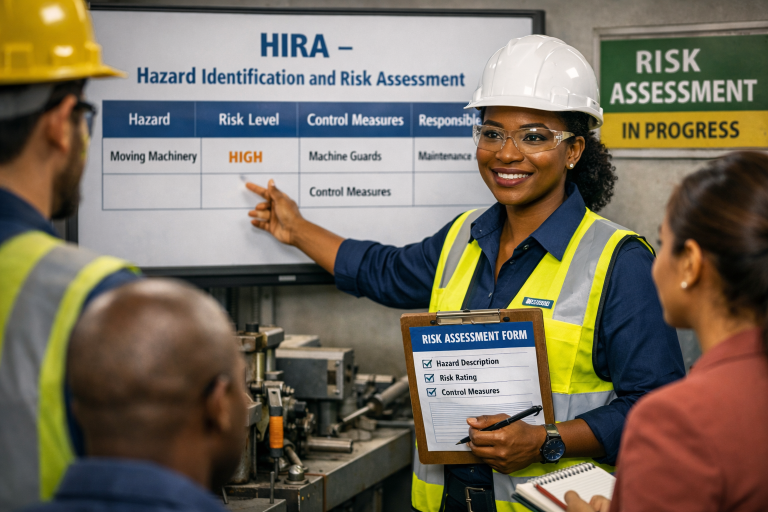
3. Incomplete Hazard Identification and Risk Assessments
Hazard Identification and Risk Assessment (HIRA) is an important part of workplace risk management.
A risk assessment that does not adequately address the actual work, identified hazards or necessary control measures may be insufficient for the project.
How to avoid this mistake:
• Identify hazards associated with the planned work.
• Assess the risks and determine appropriate control measures.
• Consider the working environment, equipment and activities involved.
• Ensure relevant employees understand the risks and controls.
• Review assessments when work conditions or activities change.
Risk assessments should reflect the actual work being performed rather than simply being copied from another project.
4. Missing Method Statements Where Required
Certain projects require method statements describing how particular activities will be carried out safely.
A missing method statement, or one that does not address the actual work, may result in a request for corrections.
How to avoid this mistake:
• Check which activities require method statements.
• Describe the work processes clearly.
• Identify relevant hazards and control measures.
• Ensure the proposed methods are consistent with the risk assessments and project requirements.
5. Incomplete Employee Training and Competency Records
Contractors may need to demonstrate that employees have the appropriate training, instruction, experience or competency for their assigned tasks.
Missing records or expired credentials, where applicable, can create problems during document reviews.
How to avoid this mistake:
• Check the training requirements for each role.
• Maintain relevant training certificates and attendance records.
• Verify the validity of time-limited certificates where applicable.
• Keep records of task-specific instruction and competency assessments.
• Confirm that employees are authorised and competent for their assigned work.
Training requirements depend on the activity, applicable legislation and client specifications.
6. Missing Medical Fitness Documentation Where Applicable
Some workplaces and activities require evidence of medical fitness for employees performing particular duties.
Contractors should not assume that medical documentation is either unnecessary or identical for every project.
How to avoid this mistake:
• Confirm the applicable medical fitness requirements.
• Ensure required assessments have been completed by the appropriate professionals.
• Check that relevant fitness certificates are valid.
• Maintain employee medical information securely and protect confidentiality.
Only the documentation required for the relevant purpose should be included in the Safety File, with sensitive medical information handled appropriately.
7. Incomplete Appointments and Assigned Responsibilities
Health and safety responsibilities need to be clearly assigned where required.
Missing appointment letters, incomplete records or documents that do not reflect the organisation’s actual arrangements may result in queries.
How to avoid this mistake:
• Identify the appointments required for the organisation and project.
• Ensure documents contain the correct names and positions.
• Confirm that appointments are appropriate to the person’s role and competence.
• Obtain the necessary acknowledgements and signatures.
• Keep appointment records up to date.
Appointments should reflect applicable legal requirements and the actual responsibilities assigned.
8. Missing Inspection, Maintenance or Equipment Records
Depending on the work and client requirements, contractors may need to provide records relating to equipment inspections, maintenance, testing or other safety checks.
These records can be particularly important where equipment failure could create a significant safety risk.
How to avoid this mistake:
• Identify the equipment and records relevant to the project.
• Maintain inspection and maintenance records where required.
• Check the validity of certificates or inspection reports where applicable.
• Confirm that equipment is suitable for its intended use.
• Keep relevant documentation accessible for review.
The exact records required will depend on the equipment, applicable regulations and the client’s specifications.
9. Expired Documents and Incorrect Company Information
Even when a Safety File contains the right types of documents, outdated information can create unnecessary problems.
Examples include expired certificates, incorrect company details, inconsistent project information and documents relating to a previous contractor or site.
How to avoid this mistake:
Before submitting your Safety File, check:
• Company name and registration details.
• Client and project information.
• Certificate validity dates.
• Employee names and relevant training records.
• Signatures and approval dates.
• Document revision dates where applicable.
A final review can help identify inconsistencies before the file reaches the client.
10. Submitting the File Without a Final Quality Check
A contractor may spend considerable time preparing documentation but overlook simple errors during the final submission.
Missing pages, incomplete forms, unreadable scans and incorrectly organised documents can make a Safety File difficult to assess.
How to avoid this mistake:
Carry out a final quality check before submission.
Use the client’s checklist to confirm that all required documents are present, properly completed and organised in the requested format.
Where possible, ask someone familiar with the project requirements to review the file before it is submitted.
A well-organised Safety File makes it easier to locate information and identify any outstanding requirements.
________________________________________
Bonus Tip: Do Not Wait Until the Last Minute
Preparing a Safety File should form part of your project planning.
Leaving the process until the last minute can result in missing documents, rushed risk assessments and delays while outstanding information is obtained.
Start early, communicate with the client and allow sufficient time for review and corrections.
Remember that compiling a Safety File does not, by itself, guarantee approval. The contents must address the applicable legal requirements, the actual work and the client’s project-specific requirements.
Need Help With Your Contractor Safety File?
Preparing a contractor Safety File can be time-consuming, particularly when you are trying to meet a client’s requirements while managing your business and preparing for a project.
BlueRisk LKD provides Safety File compilation and occupational health and safety compliance support to help contractors prepare their documentation.
Whether you are preparing for a construction project, a mining-related contract or another industrial assignment, we can help you identify the documentation required and work towards a properly organised submission.
Let BlueRisk LKD help you prepare.
Visit our website to learn more about our Safety File services.
Website: https://www.bluerisklkd.co.za/
Safety File services: https://www.bluerisklkd.co.za/safety-files/
Contact us: admin@bluerisklkd.co.za
BlueRisk LKD — Legal Compliance, Knowledge, Diligence.
________________________________________
Disclaimer: This article provides general information and guidance. Safety File requirements vary according to the work, applicable legislation, project circumstances and client specifications. The information in this article does not constitute legal advice or guarantee acceptance of a Safety File.
________________________________________