What Is a Risk Assessment? A Simple Guide for Beginners
What Is a Risk Assessment? A Simple Guide for Beginners
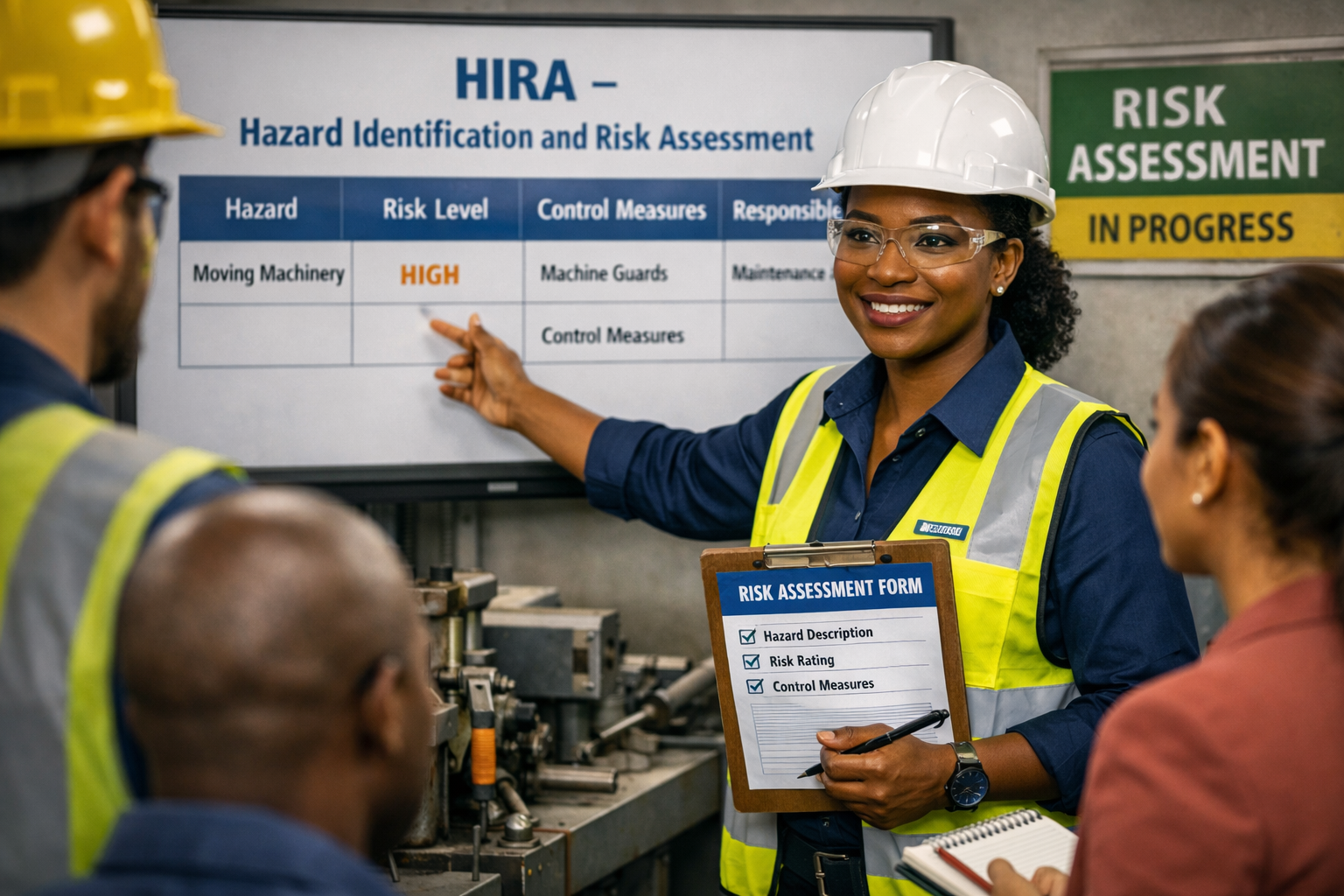
A risk assessment is one of the most important tools in Occupational Health & Safety. It helps you identify hazards, understand the risks they pose, and decide what controls are needed to keep people safe.
In simple terms:
A risk assessment is a structured way to find dangers before they cause harm.
Every workplace — from offices to mines — must conduct risk assessments to comply with the OHS Act and reduce incidents.
Why Risk Assessments Matter
Risk assessments are essential because they:
- Prevent injuries and incidents
- Protect employees and equipment
- Reduce downtime and financial loss
- Help companies comply with legal requirements
- Prepare you for audits and inspections
- Strengthen your safety culture
A good risk assessment is not just paperwork — it’s a practical tool that guides safe behaviour.
The Three Key Parts of a Risk Assessment
A proper risk assessment always includes:
1. Hazard Identification (H)
This is where you look for anything that can cause harm.
Examples:
- Slippery floors
- Moving machinery
- Working at heights
- Chemicals
- Poor lighting
- Electrical equipment
2. Risk Evaluation (R)
You assess:
- How likely the hazard is to cause harm
- How severe the harm could be
This helps you prioritise which risks need urgent attention.
3. Risk Control (C)
You decide what actions will reduce or eliminate the risk.
Examples:
- Guardrails
- PPE
- Training
- Safe work procedures
- Isolation and lockout
- Regular inspections
Simple Example of a Risk Assessment
Hazard: Working on a ladder Risk: Falling and injuring yourself Controls:
- Use a stable ladder
- Inspect ladder before use
- Maintain three points of contact
- Do not overreach
- Use fall protection if required
This is how risk assessments turn hazards into manageable tasks.
Who Should Do Risk Assessments?
Risk assessments should be done by:
- Supervisors
- Health & Safety Representatives
- Competent persons trained in HIRA
- Anyone responsible for workplace safety
Training is essential — untrained staff often miss critical hazards.
How Often Should You Do Risk Assessments?
Risk assessments should be done:
- When starting a new task
- When equipment changes
- When incidents occur
- When new hazards appear
- During audits
- At regular intervals (monthly or quarterly)
Risk assessments are not “once‑off” documents — they must be updated.
Common Mistakes in Risk Assessments
Avoid these pitfalls:
- Copy‑and‑paste assessments
- Ignoring real site conditions
- Not involving workers
- Overcomplicating the process
- Forgetting to update controls
- Filing assessments without implementing actions
A risk assessment is only useful if it is practical and applied.
Final Thoughts
Risk assessments are the foundation of workplace safety. They help you understand hazards, control risks, and protect your people.
If you want to learn how to conduct proper risk assessments, BLUERISKLKD.co.za offers a beginner‑friendly online course that teaches you exactly how to do it.
Call to Action
Ready to learn risk assessment the right way? Visit the BLUERISKLKD.co.za Training Academy and enrol in Risk Assessment Essentials (Online).