Preparing for an OHS Inspection: A Practical Checklist for Employers
Preparing for an OHS Inspection: A Practical Checklist for Employers
Is your business ready for an Occupational Health and Safety inspection?
For many employers, preparing for an OHS inspection can seem like a daunting task. Missing documentation, incomplete risk assessments and unsafe workplace conditions can create unnecessary problems and may require corrective action.
However, preparing in advance can help your business identify potential shortcomings, improve workplace safety and demonstrate that health and safety is taken seriously.
In South Africa, employers have legal responsibilities relating to workplace health and safety. Understanding these responsibilities and maintaining appropriate documentation are important steps towards a safer working environment.
At BlueRisk LKD, we believe that effective health and safety compliance starts with proper preparation, practical risk management and organised documentation.
In this guide, we provide a practical checklist to help employers prepare for an OHS inspection.
1. Review Your Health and Safety Documentation
An important part of preparing for an inspection is checking that your health and safety documentation is appropriate for your workplace and activities.
Depending on the nature of your business, relevant documents may include:
• Your health and safety policy.
• Workplace hazard identification and risk assessments.
• Safe work procedures and method statements where required.
• Emergency procedures.
• Relevant employee training and competency records.
• Applicable health and safety appointments.
• Equipment inspection and maintenance records.
• Accident and incident records.
• Contractor health and safety documentation, where applicable.
Practical tip: Do not simply check whether documents exist. Make sure they are completed correctly, reflect your current operations and are available when required.
Documentation requirements vary according to the applicable legislation, the workplace, the activities performed and any relevant client requirements.
2. Check Your Risk Assessments
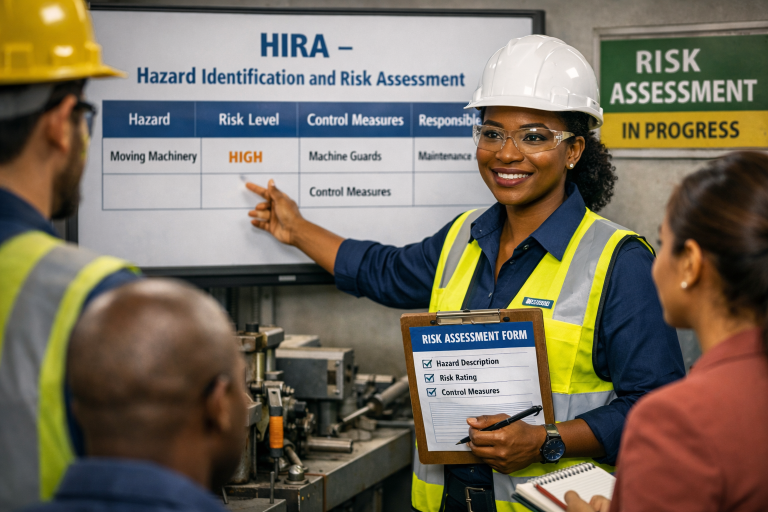
Risk assessments help employers identify workplace hazards, evaluate risks and determine appropriate control measures.
Before an inspection, review your assessments to ensure they reflect the actual activities being undertaken.
Ask yourself:
• Have the significant workplace hazards been identified?
• Have the associated risks been assessed?
• Are suitable control measures in place?
• Have employees been informed about relevant hazards and precautions?
• Have assessments been reviewed when work activities or conditions changed?
For contractors, particular attention should be given to hazards associated with the specific project and work environment.
A risk assessment copied from another workplace may fail to address the hazards your employees actually face.
3. Inspect the Physical Workplace
A well-organised Safety File is important where required, but paperwork alone cannot make a workplace safe.
Walk through your premises or worksite and look for hazards that may require attention.
Your inspection should consider the following, as applicable:
Housekeeping
• Are walkways and work areas free from unnecessary obstructions?
• Are materials stored safely?
• Are emergency exits accessible?
Machinery and equipment
• Are appropriate guards fitted?
• Are equipment inspections and maintenance up to date where required?
• Are defective items removed from service when necessary?
Electrical safety
• Are electrical installations and equipment maintained appropriately?
• Are damaged cables or unsafe electrical conditions addressed?
• Are electrical distribution areas kept accessible and secure?
Fire safety
• Are appropriate fire-fighting arrangements in place?
• Are emergency routes and exits accessible?
• Are relevant fire safety equipment inspections current?
Personal protective equipment
• Is suitable PPE available for the work being performed?
• Are employees using it correctly?
• Is damaged or unsuitable equipment replaced?
The precise checks required will depend on your workplace and the hazards present.
4. Verify Employee Training and Competency
Employees need appropriate information, instruction, training and supervision to perform their work safely.
Before an inspection, check whether relevant training and competency records are available.
Depending on the work, these may include:
• Health and safety induction records.
• Hazard awareness training.
• Task-specific training.
• Relevant equipment operating authorisations.
• Working-at-height training where applicable.
• First-aid training where required.
• Training attendance registers and supporting certificates.
Remember that a certificate alone does not necessarily demonstrate that an employee is competent to perform every task.
Employers should ensure that employees understand the hazards associated with their work and know which precautions they must follow.
5. Check Health and Safety Responsibilities and Appointments
Employers should review the health and safety responsibilities and appointments applicable to their organisation.
Depending on the business and relevant legal requirements, these may include health and safety representatives, first aiders, fire-related responsibilities and other designated roles.
Check that:
• Required appointments have been made.
• Appointment documents are properly completed.
• Individuals understand their assigned responsibilities.
• Appropriate training has been provided where required.
• Arrangements remain suitable for the current workplace.
Important: Not every appointment applies to every business. Requirements should be determined by the relevant legislation and the circumstances of the workplace.
6. Review Emergency Preparedness
An emergency can occur even in a well-managed workplace.
Employers should ensure that appropriate emergency arrangements are in place and understood by the people who may need to use them.
Consider the following questions:
• Are emergency procedures documented where appropriate?
• Do employees know how to raise the alarm?
• Are evacuation routes and exits accessible?
• Are emergency contact details available?
• Are first-aid arrangements appropriate for the workplace?
• Have relevant emergency procedures or drills been practised where necessary?
• Are arrangements in place for foreseeable emergencies associated with the work?
Emergency arrangements should be appropriate to the hazards, size and activities of the workplace.
7. Examine Accident and Incident Records
Accident and incident records can help identify recurring problems and areas where additional controls may be necessary.
Before an inspection, check that relevant records are properly maintained and that incidents requiring investigation or reporting have been dealt with appropriately.
Ask yourself:
• Are relevant incidents recorded?
• Have incidents been investigated where required?
• Have appropriate corrective actions been identified?
• Have outstanding actions been followed up?
• Are applicable statutory reporting requirements being met?
Employers should also consider near misses, where recorded, because they may reveal hazards before someone is seriously injured.
8. Check Contractor Compliance
If your business appoints contractors, or if your business operates as a contractor, health and safety responsibilities should be considered carefully.
For contractor operations, relevant checks may include:
• Required contractor Safety File documentation.
• Project-specific risk assessments.
• Relevant training and competency records.
• Required appointments and authorisations.
• Equipment inspection records where applicable.
• Compliance with the principal contractor’s site rules.
• Communication of hazards and control measures.
Contractor requirements should be confirmed before work starts, rather than leaving important documentation until the last minute.
At BlueRisk LKD, we recognise that preparing and organising contractor health and safety documentation can be a demanding administrative task.
9. Identify and Correct Outstanding Problems
A workplace inspection or internal review is most useful when identified problems lead to corrective action.
Create a list of outstanding issues and prioritise them according to the seriousness of the risk.
For each issue, record:
• What the problem is.
• What action is required.
• Who is responsible for addressing it.
• The target completion date.
• Whether the corrective action has been completed and checked.
Where an immediate danger exists, take appropriate action to protect people rather than waiting for a scheduled inspection.
Keeping a record of corrective actions can help demonstrate that identified risks are being addressed systematically.
10. Make Sure Documents Are Organised and Accessible
Searching through disorganised paperwork during an inspection can waste time and make it difficult to locate important information.
Organise relevant documents so they can be retrieved when needed.
Depending on the workplace and project, this may involve:
• Clearly labelled physical files.
• A structured electronic document system.
• A document index or checklist.
• Appropriate version control.
• Secure storage of confidential information.
• A process for reviewing documents when they expire or circumstances change.
For contractors, always check the client’s required Safety File format and submission process.
A properly organised file supports the inspection process, but it does not replace the need for effective health and safety arrangements in the workplace.
________________________________________
Employer’s OHS Inspection Preparation Checklist
Use this quick checklist as a starting point for your own internal review.
No. Item to check Complete
1 Relevant health and safety policies are available and current. ☐
2 Workplace risk assessments have been reviewed. ☐
3 Safe work procedures and method statements are available where required. ☐
4 Relevant employee training records are available. ☐
5 Applicable health and safety appointments have been reviewed. ☐
6 Workplace hazards and unsafe conditions have been identified. ☐
7 Relevant equipment inspection and maintenance records are available. ☐
8 Emergency procedures and arrangements have been reviewed. ☐
9 Relevant accident and incident records are maintained. ☐
10 Contractor documentation has been checked where applicable. ☐
11 Outstanding corrective actions have been followed up. ☐
12 Required documents are organised and accessible. ☐
Please note: This is a general preparation checklist, not a complete statement of South African legal requirements. Your business may need additional checks depending on its activities, workplace risks and applicable legislation.
________________________________________
Why OHS Compliance Should Be an Ongoing Process
Preparing for an inspection should not be a once-off exercise.
A business that only reviews its health and safety arrangements when an inspection is expected may overlook developing hazards, outdated documents and incomplete corrective actions.
A more effective approach is to review workplace risks regularly, maintain relevant documentation, provide appropriate training and address problems as they arise.
This can help employers develop a stronger safety culture while improving their ability to demonstrate compliance with applicable requirements.
Need Assistance With Your OHS Compliance?
Understanding what needs to be checked is one thing. Ensuring that your documentation is appropriate, organised and aligned with your workplace requirements can be another challenge.
BlueRisk LKD provides occupational health and safety compliance support and Safety File compilation services for businesses and contractors.
We can assist you with preparing and organising relevant health and safety documentation, including contractor Safety Files, according to the requirements applicable to your work and project.
Whether you are preparing for a workplace inspection, reviewing your existing documentation or getting ready for a contractor appointment, taking action before problems arise is a sensible first step.
Take the next step towards better OHS preparation.
Visit BlueRisk LKD to learn more about our services.
Website: https://www.bluerisklkd.co.za/
Safety File services: https://www.bluerisklkd.co.za/safety-file.html
Email: admin@bluerisklkd.co.za
BlueRisk LKD — Legal Compliance, Knowledge, Diligence.
Disclaimer: This article provides general information for educational purposes and is not legal advice. It is not an exhaustive checklist of statutory requirements. Employers should confirm the requirements applicable to their workplace and seek competent professional advice where necessary.